
Blainville (Nord)
What Capping Means for Real Estate Agents
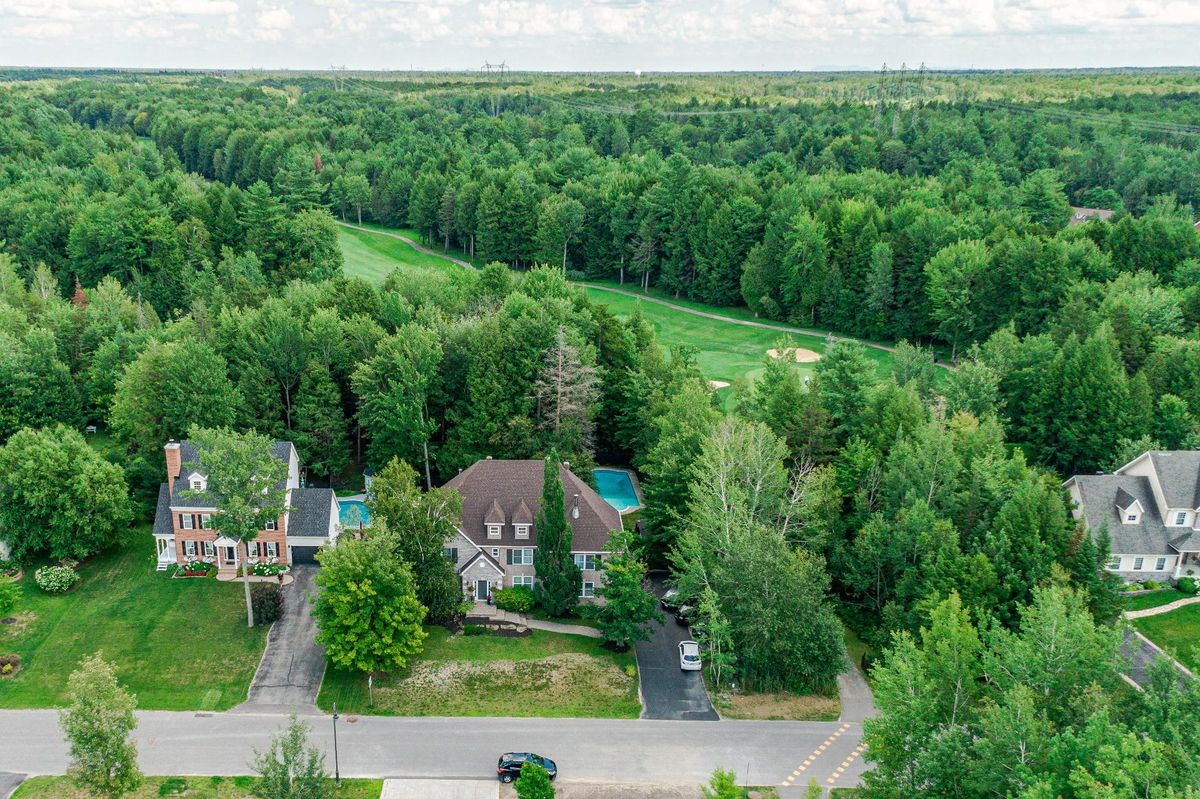
Nestled within the serene Blainvillier sector, alongside the lush greens of the Golf course, stands an exquisite abode deserving of utmost admiration. This distinguished cottage boasts five expansive bedrooms, each meticulously crafted as individual sanctuaries, offering every family member their own private retreat complete with a full bathroom and a spacious walk-in closet. Step outside and be captivated by the sprawling wooded grounds, providing both ample space and privacy, along with parking accommodations for up to seven vehicles and a stunning in-ground saltwater pool.
- Lot area16,146 SF
- Number of rooms27
- Year built1999
5 Bedrooms5 Bathrooms1 Washrooms2 Double width or moreInground PoolWood fireplace
Building details and property interior
- Size
- 60'6" X 40'4" Irregular
- Year built
- 1999
- Foundation
- Poured concrete
- Siding
- Aggregate, Brick
- Roofing
- Asphalt shingles
- Garage
- Attached, Heated, Double width or more
- Bathroom
- Ensuite bathroom, Separate shower
- Basement
- 6 feet and more, Finished basement
Lot and exterior features
- Lot size
- 98'5" X 164' Irregular
- Lot area
- 16,145.87 SF
- Lot
- Fenced, Wooded, Landscaped
- Topography
- Flat
- View
- Panoramic
- Driveway
- Asphalt
- Parking (total)
- Driveway : 8, Garage : 2
- Pool
- Heated, Inground
- Proximity
- Highway, CEGEP, Daycare centre, Golf, Hospital, Park, Bicycle path, Elementary school, Alpine skiing, High school, Cross-country skiing, CARAC.PROX.SMOT, CARAC.PROX.SVTT, Commuter train, Public transportation, University
Characteristics
- Heating System
- Forced air
- Heating Energy
- Dual energy, Electricity, Heating oil
- Fireplace-Stove
- Wood fireplace, Wood stove
- Equipment/Services
- Central vacuum cleaner system installation, CARAC.EQUI.BALC, CARAC.EQUI.COUR, Central heat pump
- Water Supply
- Municipality
- Sewage System
- Disposal field, Septic tank
Included & Excluded
- Included
- Cooktop, built-in oven, dishwasher, all blinds, pool heat pump (2020), central vacuum, small generator.
- Excluded
- Curtains, all appliances, pendant light in basement, TV stands, all owners personal effects.
Capping in real estate is a commission arrangement in which an agent pays the brokerage a fixed total amount each year and retains all additional earnings once that limit is reached.
How Commission Capping Works
Under a capping model an agent begins on a split such as 70 percent to the agent and 30 percent to the brokerage. The brokerage collects its share on every transaction until the agent’s cumulative payments reach the predetermined cap. After that point the split shifts to 100 percent for the agent for the remainder of the annual period. The cap amount itself varies by market center and reflects local operating costs and typical home prices.
Typical Production Needed to Reach the Cap
Reaching the cap commonly requires selling roughly eight to ten homes in a year, though the exact number depends on average sale prices and the brokerage’s fee schedule. Once production meets the cap the agent no longer remits a percentage of commissions to the brokerage until the anniversary date resets the cycle. This structure rewards consistent volume while giving agents full earnings on later transactions.
Benefits for Agents
Agents gain predictability because the maximum amount paid to the brokerage is known in advance. High producers keep a larger share of income after the cap, which can increase take-home pay compared with uncapped splits. The model also encourages agents to stay with one brokerage for the full year to realize the 100 percent payout phase.
Brokerage Examples and Variations
One large franchise uses a 70/30 split that includes a franchise fee capped at three thousand dollars per year. Another formulation shows a 64/30/6 split that produces the same net result once the annual cap is applied. Each office sets its own cap based on local economics, so agents should review the specific figure for their market center rather than assuming a universal number.
Distinguishing Capping from Capitalization Rates
Commission capping applies to agent compensation and is unrelated to capitalization rates used in property valuation. A capitalization rate divides a property’s first-year net operating income by its purchase price to express yield. The two concepts share the word “cap” but serve entirely different purposes in residential versus commercial real estate analysis.
Factors to Review Before Choosing a Capped Model
Agents should examine the exact cap dollar amount, the anniversary date that resets the clock, and any additional fees that continue after the cap. Market conditions that affect average sale prices can change how many transactions are needed to reach the limit. Comparing the cap against expected annual production helps determine whether the structure aligns with individual business goals.
Practical Steps for Evaluation
- Request the brokerage’s written cap policy and fee schedule.
- Calculate projected earnings at different production levels both before and after the cap.
- Confirm whether any ongoing fees remain once the cap is met.
- Compare the structure with other brokerages in the same market.
These steps provide a clear picture of how capping affects net income over a full year.
Sources
- What Is Capping in Real Estate?
- capping
- What is a Cap Rate? Definition, Formula and Examples